En
En
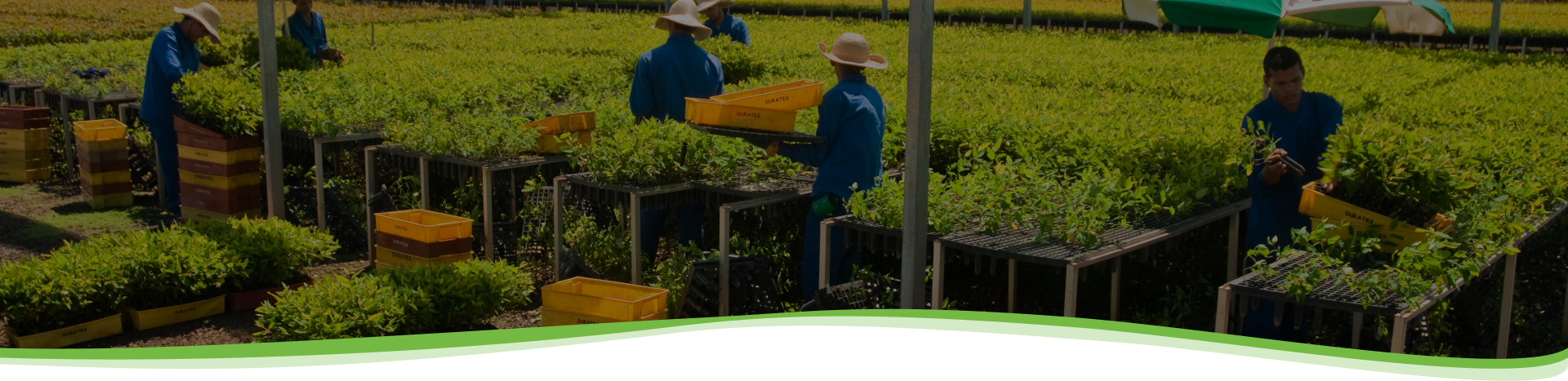
Integrating practices from the bioeconomy and circular economy on a large scale, this is a sector that plants trees, to restore native forests or for commercial purposes, meeting modern consumer demand for ecosystem services and bioproducts from renewable origins that are recyclable and often biodegradable.
Brazil’s planted tree industry is recognized around the world and has established itself as a global powerhouse. The sector generates millions of direct and indirect jobs, positively impacting regions with low economic turnover and improving the quality of life in areas far from large urban centers. This contribution is vital to reduce regional inequalities and promote inclusive development.
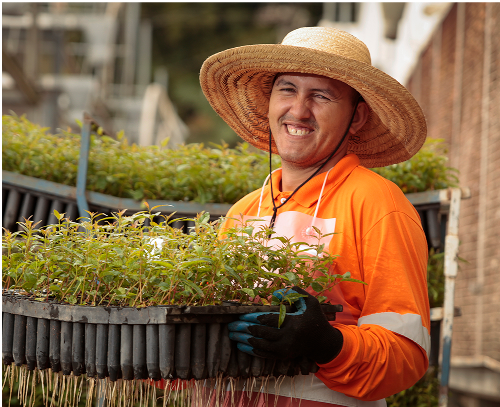
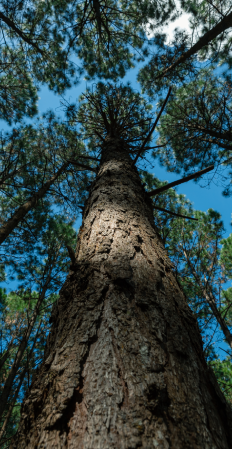
Caring for the environment is the heart of strategy in this industry that plants, harvests and replants, often in previously degraded areas. The sector plants 1.8 million trees per day. One of the most important management practices is mosaic planting, which intersperses conservation areas with forests planted for industrial purposes at the landscape level. Both planted and preserved areas store and remove carbon from the atmosphere, demonstrating their potential to mitigate climate change. This intelligent use of the land also helps regulate water flow, soil fertility and biodiversity. Producing while also preserving areas generates wealth for Brazil.
Trees are planted by companies in the sector as well as through important forest outgrower support programs that generate social value in regions of Brazil far from large urban centers, providing value for small-scale producers and helping reduce the pressure on natural forests and remediate degraded soils. Through these programs, companies establish long-term partnerships with small producers which allow them to participate in the production chain; these producers provide wood from trees planted on their land, and often carry out other activities related to integrated forest/livestock/crop production that reinforce the family income.

ENVIRONMENTAL CONSERVATION
Balance between production and preservation, with recovery of degraded areas for commercial or restoration purposes.

REGIONAL DEVELOPMENT
Generating jobs and income in regions with less economic momentum, improving people’s quality of life.

AN ECONOMIC POWER
On the right side of the climate equation, the sector stands out as a global supplier of thousands of sustainable bioproducts.
By helping keep thousands of people in rural areas, outgrower support programs also diversify local activities and generate employment and income, contributing to the development of communities where plantations and industrial units are located. The companies in the planted tree productive chain invest in a variety of programs in health, education, culture, and quality of life that benefit approximately 2 million people, making the sector an important agent of economic and social development in Brazil.
With innovation and a vision of the future, the sector stands out as a global supplier of thousands of bioproducts and inputs for industries including foodstuffs, pharmaceuticals, automotive and renewable energy. It plants 1.8 million trees every day, generating renewable raw materials for a wide range of products that naturally and sustainably replace from fossil origins.
Cultivated trees also produce products and inputs like viscose for the textile industry, charcoal for steel manufacturing, honey, disinfectants, flavorings, thickeners, solvents, varnishes, glues, synthetic rubber, printing inks, waxes and grease, pellets for energy generation and crates.

BOOKS
To reach our homes in this form, trees are planted, harvested and replanted.



COSMETICS
To reach our homes in this form, trees are planted, harvested and replanted.


DIAPERS
To reach our homes in this form, trees are planted, harvested and replanted.


PACKAGING
To reach our homes in this form, trees are planted, harvested and replanted.



FABRICS
To reach our homes in this form, trees are planted, harvested and replanted.




LAMINATE FLOORING
To reach our homes in this form, trees are planted, harvested and replanted.

FURNITURE
To reach our homes in this form, trees are planted, harvested and replanted.
The sector adopts a circular production model based on minimizing waste and maximizing reuse of resources. This model is incorporated into manufacturing processes, power generation, use of recycled raw materials and disposal of resulting waste. With a new factory springing up every year and a half and a presence in over a thousand municipalities, the sector is constantly investing in innovation and cutting-edge technology, and much of the energy it consumes comes from renewable sources. These advances put the industry at the forefront of industrial decarbonization, and generate sustainable solutions.
This is a sector that is on the right side of the climate equation, and in recent years has been opening factories that strive for decarbonization and zero landfill waste. This work also involves modernizing existing units, mapping points that can be utilized to reduce emissions and use of finite or fossil sources. The three main routes in this process are recovery boilers, lime kilns, and logistics.

The planted tree sector has a portfolio of investments that are announced or already underway totaling over R$ 105 billion by 2028; these involve forests, R&D, operations and factory modernization as well as construction of new units.


 Home
Home