


En
En

Ibá member companies have certifications as a tool to demonstrate to their clients and customers that their products come from responsible forest management.
Forest certifications are based on international standards defining a set of practices which ensure environmentally responsible, socially fair and economically viable forest management.
These norms govern everything from planting and harvesting (taking into account impacts on the environment, neighboring communities, worker health and safety, and compliance with municipal, state and federal legislation) to the traceability of certified wood when it enters manufacturing processes.
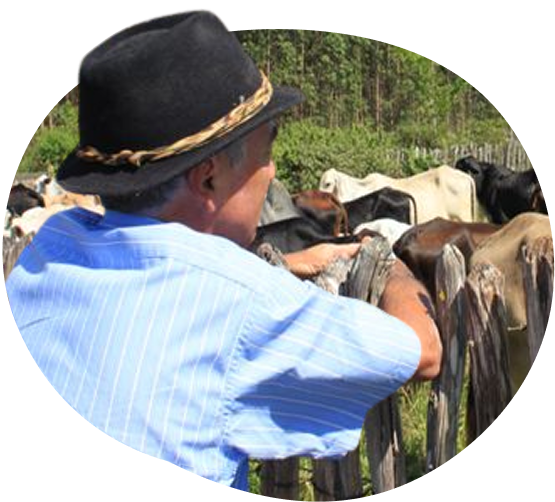
Photo: Ibá certificação
There are two widely recognized forest certification schemes: Forest Stewardship Council (FSC) and the Programme for the Endorsement of Forest Certification Systems (PEFC).
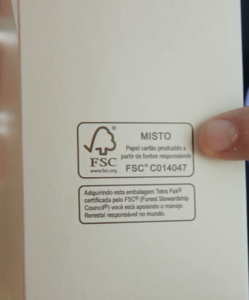
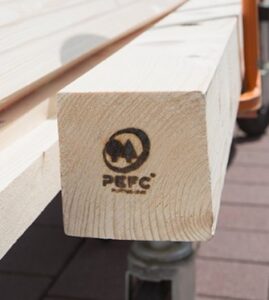
To be certified, every year a company needs to provide evidence through third-party audits that it is in compliance with up to 10 principles, which in some cases include more than 215 indicators. The audits are rigorous: independent auditors make in-person visits to various company sites as well as the region in order to verify the social and environmental responsibility of operations.

INDEPENDENT AUDITING
Independent auditors make in-person visits to sites at companies and in the surrounding communities to verify compliance with the principles and indicators.

PRINCIPLES AND INDICATORS
The company needs to comply with up to 10 principles and over 215 specific indicators of social and environmental responsibility.

CERTIFICATION GRANTED
The company receives FSC or PEFC certification by proving its commitment to sustainability.

FSC and PEFC certification requires companies to promote social and economic development in the regions where they operate, ensuring quality of life for communities. They attest to the positive impact of companies on people’s well-being and on the development of neighboring areas. Additionally, certified companies must ensure that they provide a fair and non-discriminatory working environment with gender and race equity and promote employee safety. Respect for the rights of traditional peoples and the protection of areas that are important to them are essential. Companies must also train local citizens, prioritizing the hiring of local residents and carrying out education and health activities.

In the planted tree sector, certifications work alongside the Brazilian Forest Code to fortify preservation of riparian forests, contributing to the availability of water in rivers.
Care for biodiversity is a prerequisite for a company to receive certification for its areas; this involves assessment, planning, monitoring and improving practices that pay special attention to preservation of rare and endangered species. Management must be constantly evolving, with regular analysis, adaptations and improvements to avoid and mitigate impacts on the environment. Restoration of degraded areas is followed up and monitored to demonstrate the effectiveness of these activities.
In addition to forest management and chain of custody certifications, many companies also hold relevant international certifications such as ISO standards and seals for packaging and food additives (like Kosher and Halal), reinforcing their commitment to safety and sustainability.
Ibá is a member of FSC and PEFC at the national and international levels.
The association believes in collaborations between companies, research institutes and organized civil society to strengthen and improve certification systems, ensuring that these standards deliver economically viable, socially fair and environmentally responsible forest management.
The issues Ibá articulates in the certification schemes and the sector’s participation in these numerous initiatives are built in a qualified manner, through a collaborative process that involves member companies and other stakeholders in Brazil and around the world.
Ibá is proud to represent companies that commit their professionals to serving with FSC and PEFC in their working groups and boards of directors. Over the last 10 years, many professionals from Ibá member companies have participated in these forums, actively making direct contributions to constructing the standards through consensus with institutions such as NGOs, trade unions, research agencies and consultants.
 Home
Home
