


En
En
The Brazilian planted tree sector adopts innovative practices to optimize the use of natural resources and minimize waste, based on the principles of the circular economy. This approach is implemented on a large scale that ranges from planting seedlings to the post-consumption stage of end products.
Companies in the planted tree sector have adopted rigorous management of solid waste in both their forestry and industrial activities to generate less waste and ensure that what remains is discarded the best way possible, and to comply with pertinent legal and certification-related requirements.
Photo: economia circular
most of the solid waste from forestry activities like bark, branches, and leaves are left in the fields to protect and fertilize the soil.
Together with other forest by-products like sawdust and black liquor, bark, branches and leaves are also used to generate energy, eliminating the use of fossil fuels.
Black liquor is a by-product of pulp manufacturing that stands out when it is transformed into bioenergy, reducing dependence on fossil sources and making energy generation more sustainable for forest companies. Waste like bark and chips is also used as biomass for energy generation, making their operations self-sufficient using renewable energy.
Furthermore, waste manufacturing processes like paper scraps, lime sludge and non-hazardous waste is reused as a raw material for other sectors of industry. Some examples are the transformation of ash into fertilizer for the soil, the recovery of chemicals used in pulp manufacturing in boilers and reuse of paper scraps.
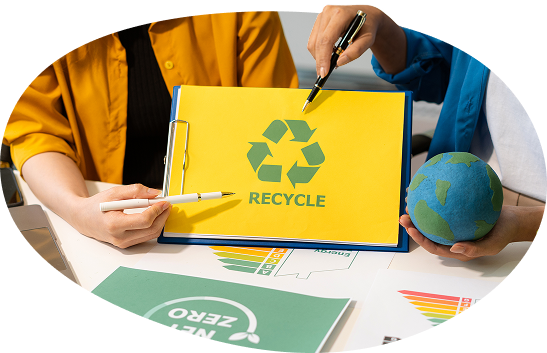
the sector stands out for recycling waste paper into packaging. Packages made of paper, cardboard and paperboard are sustainable, produced from renewable raw materials and easy to recycle. But there is a limit to paper recycling, determined by the number of times the fiber can be recycled and the need to add new fibers to ensure product quality.
Recycling involves a chain that starts with separation of solid waste by individuals and moves through collection, sorting, and preparing the collected recyclables, which are then sent to the factory to be transformed into new raw materials. From an economic point of view, this activity reduces production costs, distributes wealth and promotes the recovery of raw materials, which are reinserted into the consumption cycle.
Today, part of Brazil’s population is served by municipal recycling services, and some of these programs involve cooperatives made up of individuals who collect recyclable items. It is important to stress that most of this material goes back to manufacturing in this sector, via wastepaper wholesalers.
Recycling could become even more comprehensive through innovative public policies, better organization of the workers who collect materials, and new consumer attitudes.
To expand Brazilian industry’s contributions to sustainable development and collaborate with the federal government’s National Solid Waste Policy (PNRS) with regard to reverse logistics systems for packaging in general, several sectors with related activities have worked together with Ibá to draw up a draft agreement in which they made a voluntary commitment to establish a system of reverse logistics for packaging to reduce dry recyclable waste.
The PNRS establishes shared responsibility for integrated management of solid urban waste by the production chain during the product life cycle. The federal government’s goal is to reduce the dry weight of this waste disposed in landfills by 45% by 2031.
The planted tree industry has a very strong history in reverse logistics and has made heavy investments in sustainable practices, which impacts the entire production chain from the plantations to the finished products that reach the market. Proof can be seen in the high rate of paper recovery, which makes Brazil one of the world’s largest paper recyclers.
There is a maximum limit on the recycling capacity of different types of paper, which depends on several factors, such as the number of times the fiber can be recycled, the need to add virgin fiber in the recycling process to meet minimum quality standards, and the fact that not all paper produced returns to the production chain (such as books, documents, and storage boxes, for example).
Another prominent initiative in the sector is aimed at avoiding waste. Many companies in the sector state they promote “zero landfill” initiatives intended to eliminate disposal of materials in landfills and stimulate more sustainable waste management practices. To reach their 2030 reduction goals, many organizations are investing in coprocessing, recycling and composting.
With these sustainable practices, the planted tree industry is strengthening its image as an example of circularity. From rigorous waste management to innovation in reverse logistics, the sector is committed to a future with renewable and recyclable raw materials, helping to decarbonize the economy and build a sustainable environment.
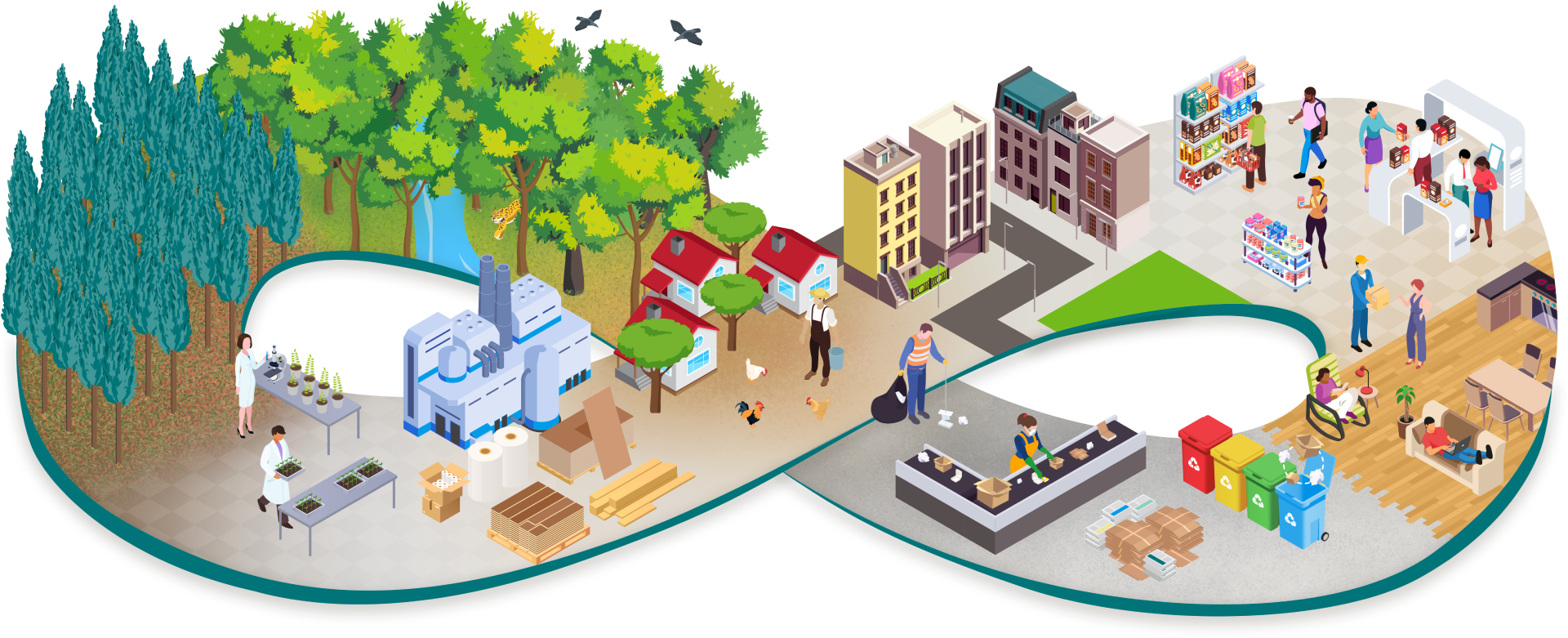
In order to disseminate good practices, make information more accessible and advise the public about proper disposal of construction waste, Ibá collaborated with several partners to produce and publish a booklet entitled “Management of Industrial Wood Waste in Construction” and an infographic “Paper recycling; from citizen to industry,” which seek to encourage this practice in the everyday life of the population.
 Home
Home
