


En
En

Cultivated pine trees are important sources of resin. Also called pine sap, this viscous substance is extracted from trees and contains a mixture of compounds such as terpenes and resin acids.
After collection, the resin goes through a distillation process that generates two main products: rosin and turpentine. Rosin is used to make paints, varnishes, adhesives, soaps, waxes and even in musical instruments, such as violin bows. Turpentine is a solvent that is widely used in paints and varnishes, and also a raw material in the production of perfumes, disinfectants, insecticides and flavorings.
Pine resin also has applications in the pharmaceutical industry and rubber production, where it is used as an additive. Another interesting use is in the food industry, where derivatives of pine resin can be used as flavorings or in chewing gum.
The Brazilian manufacturers that work with pine resin offer at least 30 applications for rosin and 40 for turpentine. This versatility gives pine resin market value, helping the planted tree industry maximize the use of plantations in a sustainable and economically viable manner.

Pine rosin
Rosin is a natural product extracted from the resin of the Pinus elliottii tree. Obtained by heating and separating out water vapor, it is widely used to produce paints, adhesives, varnishes, soaps and even in pharmaceutical formulations such as expectorants. Because it is composed exclusively of natural elements, rosin is safe to handle and poses no risk to human health or the environment.
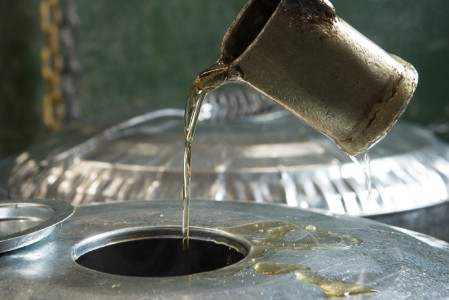
Turpentine
Turpentine is a colorless liquid with an intense, characteristic pine aroma obtained by distilling the resin of Pinus elliottii. Recognized for its high solvent capacity, it is widely used in paints, varnishes and polishes.
 Home
Home
